
15th Jul 2026
Automating ADA Sign Production with the CrystalBlast Nexus
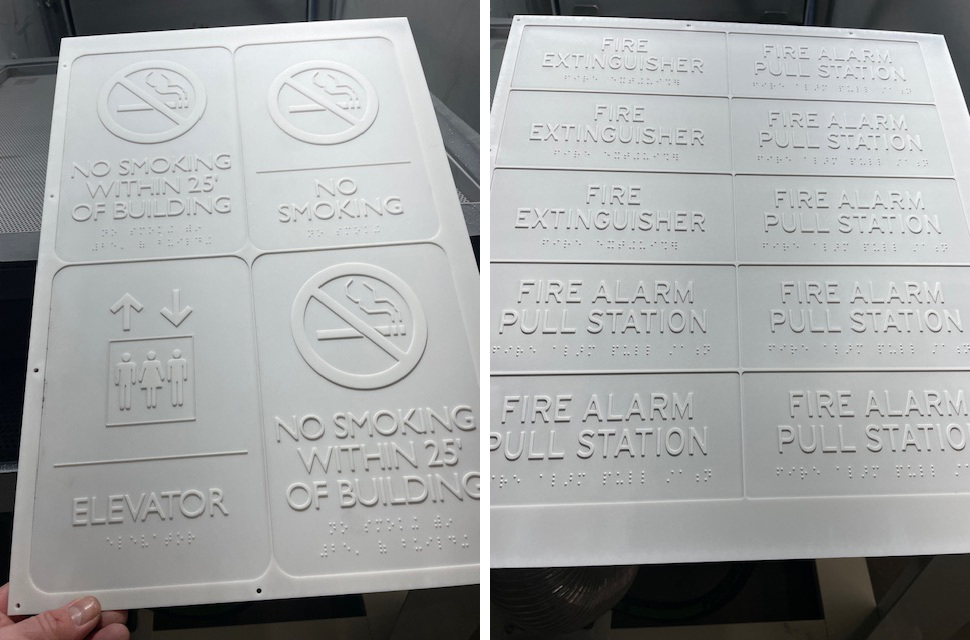
Producing ADA signage requires accuracy, consistency, and careful control throughout the fabrication process. Recessed areas for tactile lettering must be clean and uniform, while the holes used for Braille beads must be produced with the precision needed for dependable placement and assembly.
For shops producing ADA signs from melamine, sandcarving offers an effective way to create these recessed areas. However, manually blasting every sign can become time-consuming, physically demanding, and difficult to reproduce consistently across larger production runs.
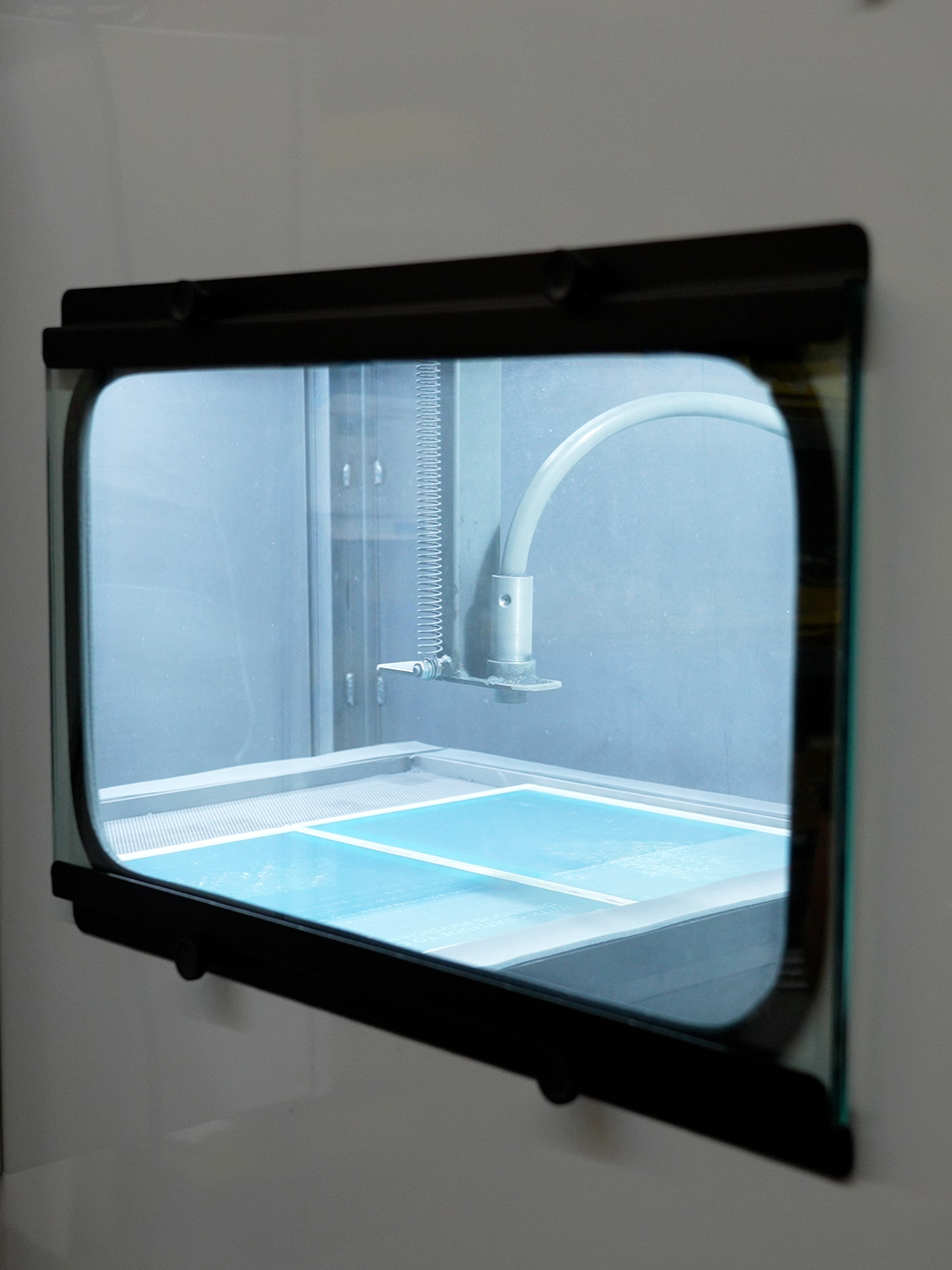
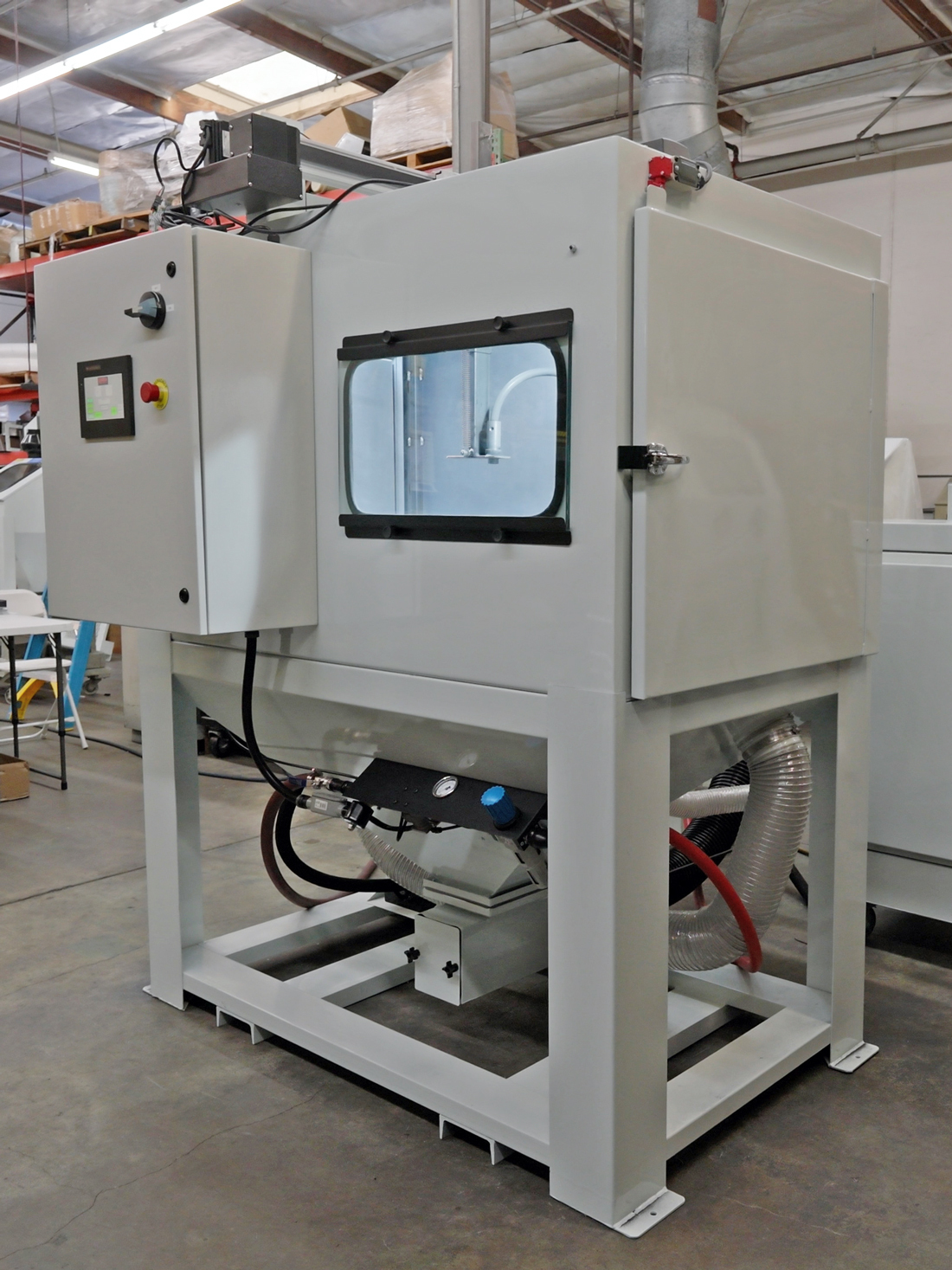
The CrystalBlast Nexus automated sandcarver helps address these challenges by automating the blasting process. Instead of requiring an operator to manually move the nozzle over every sign, the Nexus uses programmable settings to produce controlled, repeatable results.
How Sandcarving Is Used in ADA Sign Production
In melamine ADA sign production, sandcarving can perform two important functions:
- Creating recessed areas for tactile lettering
- Producing recessed holes for Braille bead placement
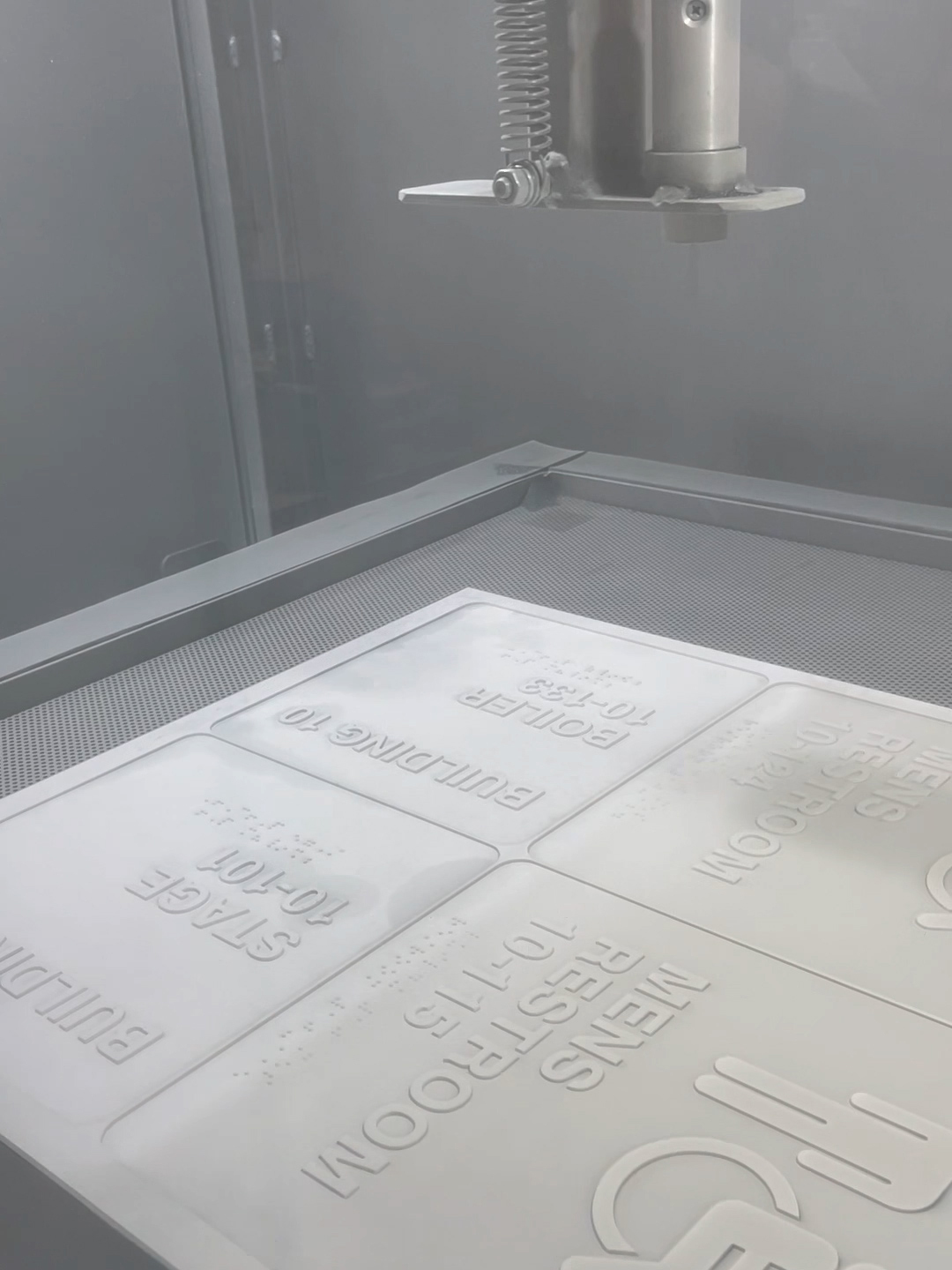
A photoresist stencil protects the areas that should remain untouched while exposing the sections that need to be carved. Abrasive is then directed through the open areas of the stencil, removing material from the melamine and creating the required recesses.
With traditional manual blasting, the operator must control the nozzle position, speed, distance, angle, and blasting time. Even an experienced operator may introduce small variations from one sign to the next. The CrystalBlast Nexus replaces much of that manual movement with a programmable blasting cycle.
Repeatable Recesses for Tactile Lettering
Consistency is especially important when producing a group of signs for the same building, facility, or sign system. Differences in blasting speed or nozzle distance can affect the depth and appearance of the recessed lettering areas.
With the Nexus, operators can control key production variables, including:
- Nozzle travel distance
- Nozzle movement speed
- Blast cycle
- Abrasive pressure
- Nozzle height
Once the process has been established for a specific melamine material, stencil, abrasive, and desired depth, the settings can be saved and repeated. This removes much of the guesswork from the blasting process. Rather than relying on an operator to recreate the same hand movement for every sign, the Nexus follows the programmed cycle.
The result is a more controlled process for producing recessed tactile-lettering areas across individual signs and larger production runs.
WATCH VIDEO: CrystalBlast Nexus Automated Sandcarving
Controlled Production of Braille Bead Recesses
The Nexus can also be used to create the recessed holes needed for Braille bead placement. These small areas require detailed stencil imaging and controlled blasting. Inconsistent nozzle movement can make some recesses deeper or shallower than others, which may complicate bead placement and finishing.
The Nexus supports abrasives as fine as 220 mesh, making it suitable for detailed stencil work. Its programmable movement and adjustable nozzle height help the operator maintain a consistent blasting process across the sign surface.
Automation does not replace the need for a properly prepared stencil or a well-developed production process. It does, however, make that process easier to repeat once the correct settings have been established.
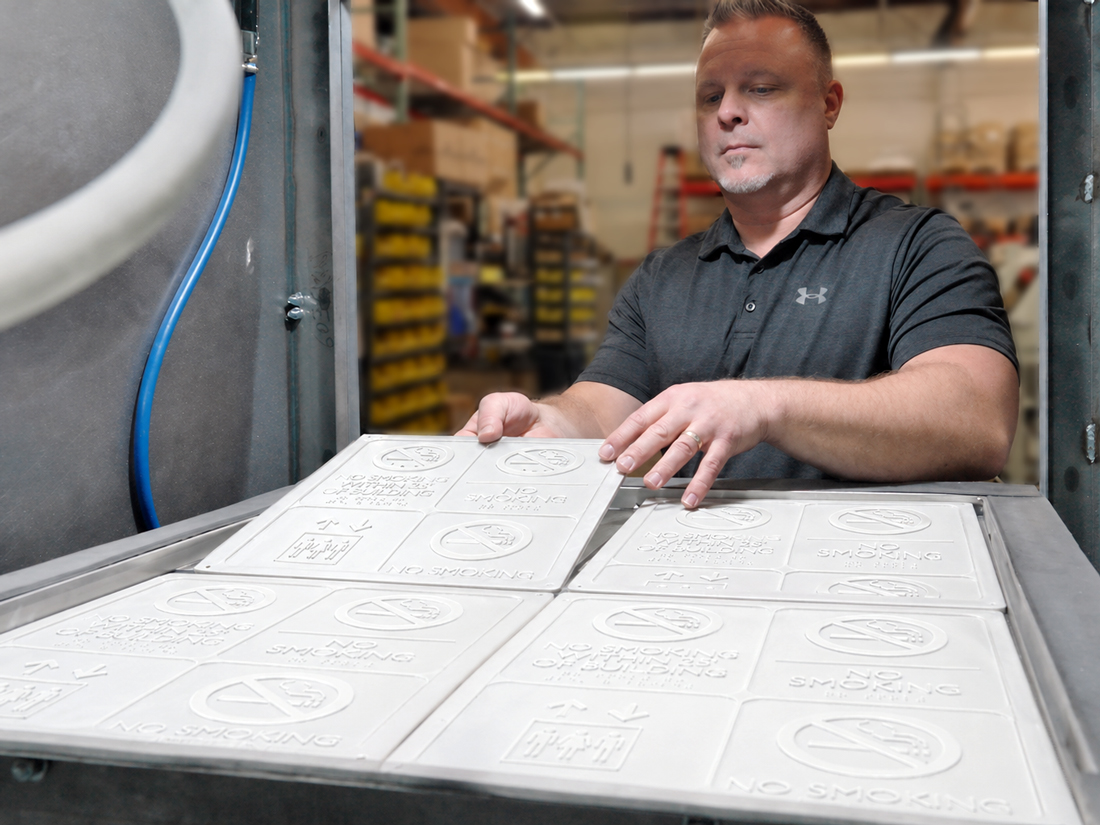
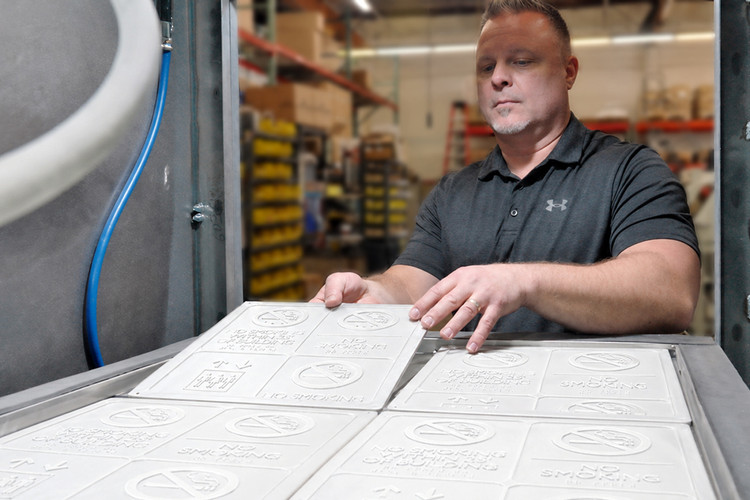
Process Multiple ADA Signs in One Automated Sandcarving Cycle
The standard CrystalBlast Nexus has a 24-inch by 24-inch imaging area. The number of ADA signs that can be processed during one cycle depends on the dimensions of each sign and how efficiently they can be arranged within that area. A shop may load:
- One larger sign panel
- Several medium-sized signs
- A larger quantity of small room-identification signs
- Multiple sign components arranged as a production batch
The SmartFlo vacuum table helps hold the parts in position during blasting. Once the table is loaded, the operator closes the access door, selects the appropriate program, and starts the automated cycle.
This gives sign producers the flexibility to process different sign sizes while making efficient use of the available imaging area.
Reduce the Labor Required for Manual Blasting
Manual sandcarving requires an employee to remain at the cabinet and control the nozzle throughout the entire blasting cycle.
With the Nexus, the operator’s role changes. The operator loads the prepared signs, selects the correct program, and starts the machine. While the Nexus completes the blasting cycle, that employee can work on other production tasks, such as:
- Preparing the next set of melamine signs
- Applying photoresist stencils
- Removing completed stencils
- Installing tactile lettering
- Placing Braille beads
- Inspecting and finishing completed signs
The Nexus does not eliminate the operator from the overall workflow. Instead, it removes the need for that person to manually perform every second of the blasting process.
For shops spending several hours each day sandcarving signs, this can provide a significant opportunity to use labor more efficiently.
Save Programs for Repeat ADA Sign Jobs
Many ADA sign projects include repeated sign sizes, layouts, materials, and design standards. A facility may require dozens or hundreds of signs that share the same construction but use different room numbers or wording.
The Nexus provides five spaces for storing specific programs. A shop could establish programs for different sign types, material configurations, carving depths, or production layouts.
For example, separate settings could be developed for:
- Small room-identification signs
- Larger directional signs
- Tactile-letter recesses
- Braille bead recesses
- Different melamine or stencil configurations
When a repeat job returns, the operator can select the established program rather than rebuilding the blasting process from the beginning. Saved programs can also help reduce dependence on individual operator technique. Once the correct settings have been documented, another trained employee can follow the same process more easily.
Cleaner, Enclosed Production
The CrystalBlast Nexus is an enclosed automated sandcarving system. Abrasive is collected, separated, and returned to the pressure pot for continued use.
Dust collector options are available based on the expected daily production schedule. Configurations are available for shops planning to operate the Nexus for approximately four hours per day, up to eight hours per day, or at higher production volumes using one or two Nexus systems.
Choosing the correct dust collection setup allows the system to be configured around the shop’s expected workload instead of forcing every producer into the same equipment arrangement.
LEARN MORE: CleanFlo Technology Explained
When Does Automation Make Sense?
The Nexus may be especially valuable for sign producers that:
- Spend several hours each day manually sandcarving
- Produce repeated ADA sign designs
- Need more consistent recess depths
- Want to reduce dependence on manual nozzle control
- Process multiple signs in production batches
- Need to increase output without assigning an employee to continuous blasting
- Want a documented, repeatable process for recurring sign programs
A shop producing only an occasional ADA sign may not need an automated system. For a producer with steady sign volume, however, the labor savings and process consistency can become increasingly valuable.
WATCH VIDEO: Automated Sandcarving for Signs & Awards at ISA
Supporting Consistent ADA Sign Production
The CrystalBlast Nexus does not determine whether a completed sign meets every applicable ADA requirement. Compliance depends on the complete sign design, fabrication process, tactile elements, Braille, contrast, spacing, placement, and installation.
What the Nexus provides is a more controlled and repeatable way to complete an important production step. By automating the creation of recessed areas for tactile lettering and Braille beads, the Nexus helps melamine sign producers reduce manual blasting, improve consistency, and create a workflow that is easier to repeat from one sign to the next.
LEARN MORE: For a broader look at how sandcarving can be used for architectural, directional, and ADA signage, read Sandcarving for the Sign Industry.
Bring Automation to Your Sign Production Process
The CrystalBlast Nexus combines a 24-inch by 24-inch imaging area with programmable nozzle movement, adjustable settings, abrasive recycling, and multiple dust collection options. It can process one large sign or multiple smaller signs, depending on the size and arrangement of the parts. For ADA sign producers looking to move beyond continuous manual blasting, the Nexus offers a practical path toward greater consistency, more efficient labor use, and scalable production. Contact IKONICS Imaging with any questions.