
16th Apr 2026
Sandcarving for the Sign Industry
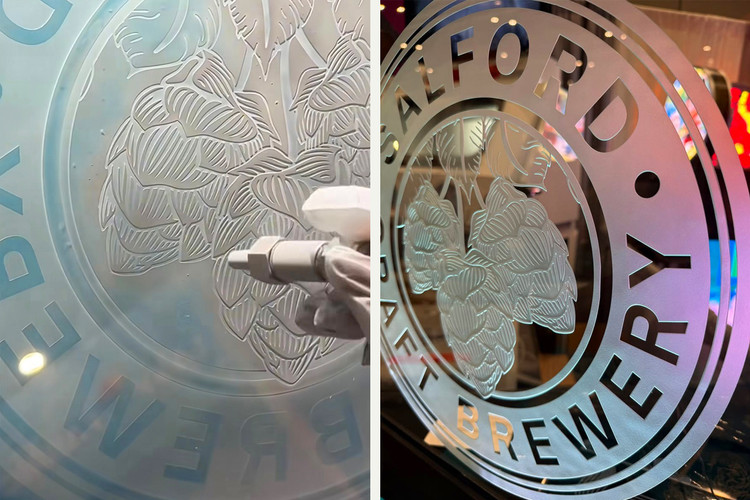
When making custom signs, the finish matters. Customers want signs that look premium, last in demanding environments, and stand apart. That is one reason sandcarving continues to be such a valuable process for sign shops. It gives signs depth, texture, and a dimensional look that is difficult to match with other decoration methods. When paired with the right sandcarving equipment and mask material, sandcarving can help sign makers expand their capabilities and take on higher-value work.
Whether your shop produces glass signage, architectural panels, monument signs, donor walls, branded displays, or wayfinding pieces, sandcarving can add a refined etched finish that elevates the final product. For sign companies looking to offer something more durable, more tactile, and more visually impressive, sandcarving is worth serious consideration.
Why Sandcarving Makes Sense for Sign Shops
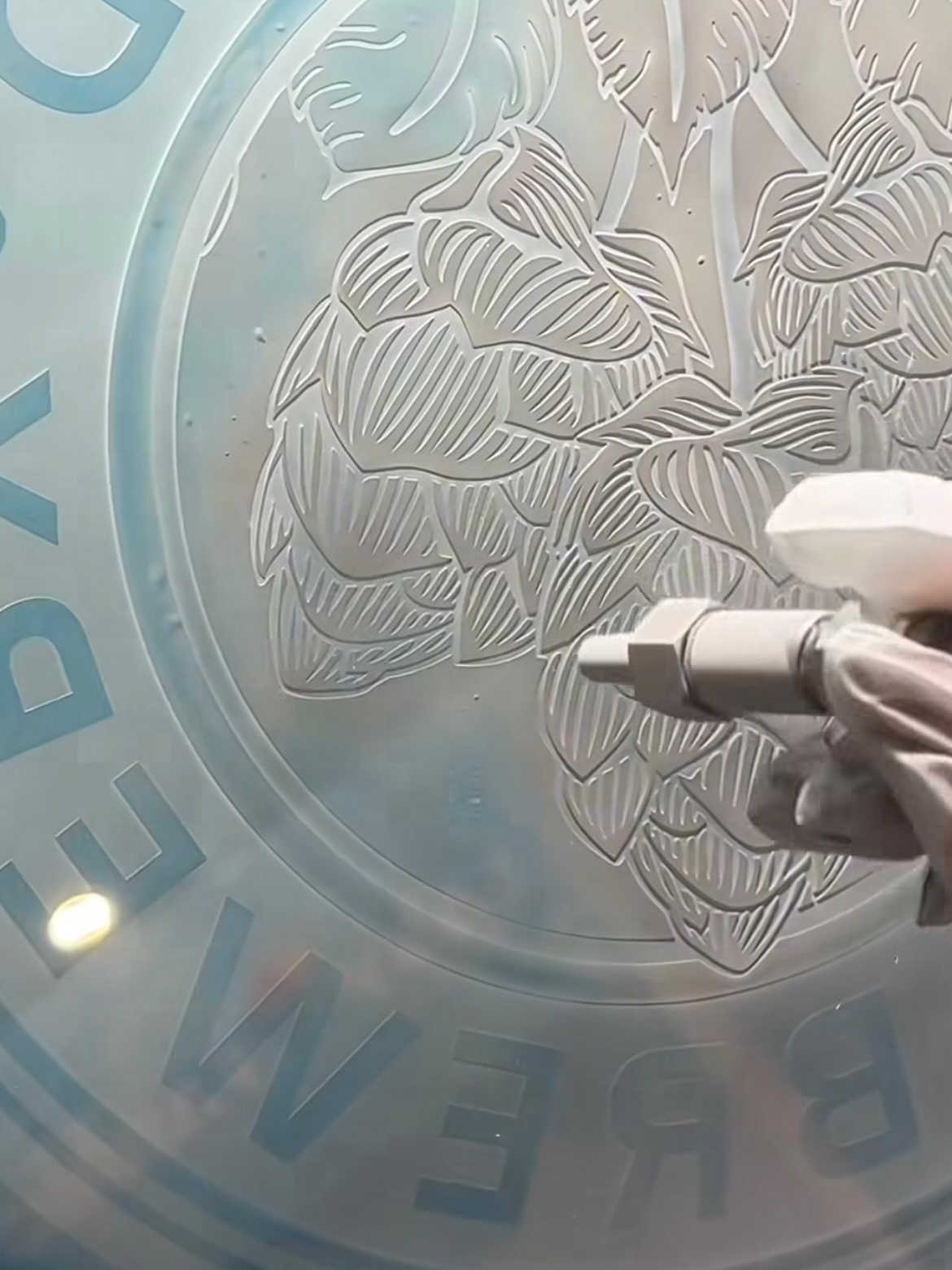
Sign makers are often looking for ways to differentiate their work while maintaining quality and efficiency. Sandcarving offers a unique combination of premium appearance, material versatility, and production flexibility. It can be used for everything from surface etching to deeper dimensional carving, depending on the substrate, mask, and desired result.
Sandcarving is especially attractive for sign shops serving architectural, donor recognition, memorial, hospitality, corporate, and civic markets. These customers often want signage that feels permanent, custom, and high-end. Sandcarving helps deliver that look.
Benefits of Sandcarving vs. Other Methods
1. More depth and dimension
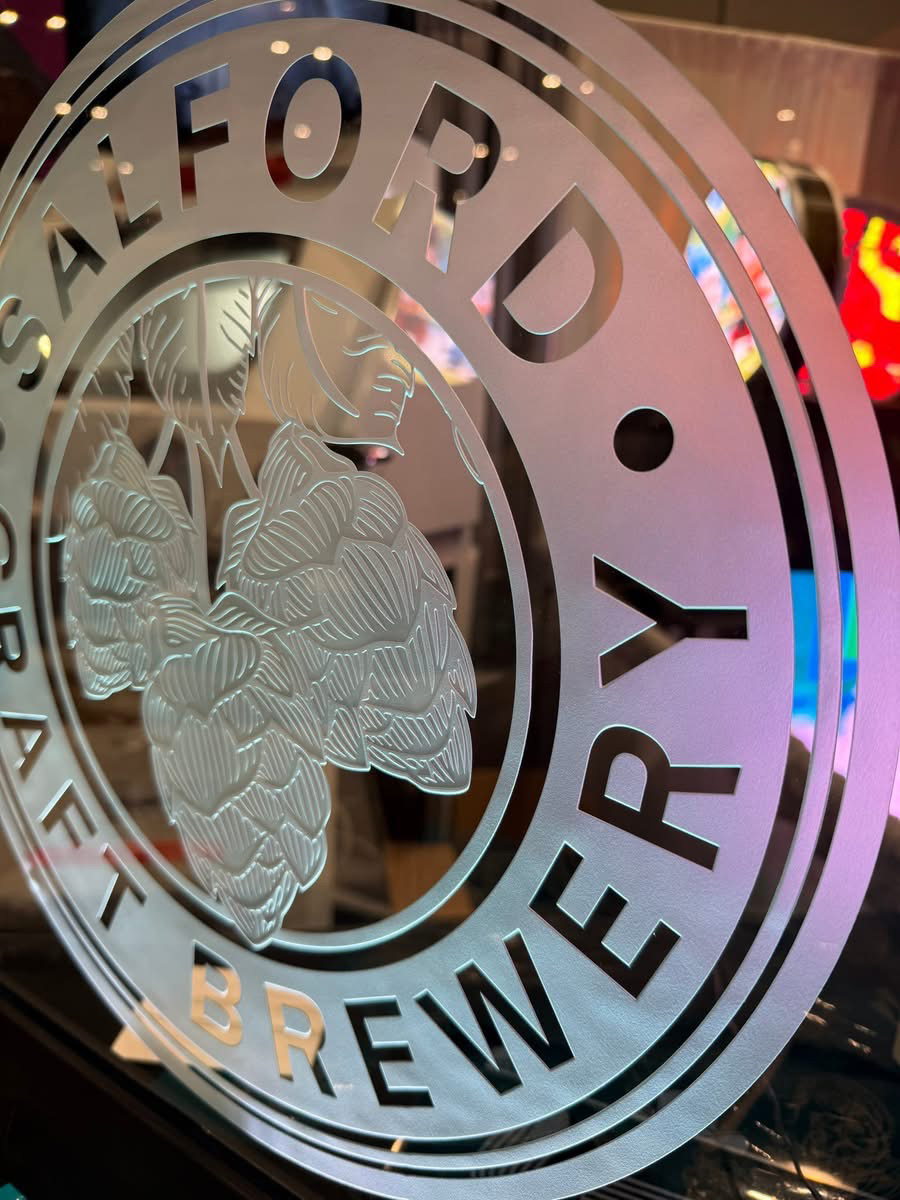
One of the biggest advantages of sandcarving is the finished look. Compared with decoration methods that remain mostly on the surface, sandcarving creates true etched depth and a smooth, uniform finish. This added dimension can make logos, lettering, and decorative elements look more substantial and premium.
2. A more elevated finish for premium signage
For glass signs, stone signs, monument-style pieces, and architectural panels, appearance is everything. Sandcarving creates a refined etched effect that works especially well on hard surfaces where customers expect a polished, lasting result.
3. Versatility across many substrates
Sandcarving is a strong fit for the sign industry because it can be used on a wide range of materials. Depending on the mask you choose and the depth you need, it can be used on glass, crystal, stone, brick, ceramics, powder-coated metal, wood, and more.
4. Great for paint filling and layered effects
Sandcarving also works well for signs that need paint fill or more dramatic visual contrast. This makes it a great option for detailed logos, directional signage, branded displays, and donor recognition pieces where clean edges matter.
5. Helps shops expand into higher-value work
Adding sandcarving can help a sign shop say yes to more premium projects. It can support architectural signage, oversized glass panels, monument work, dimensional branding, and production-oriented etched signage that may be difficult to achieve with other methods alone.
Recommended Sandcarvers for Engraving Signs
The right sandcarver depends on the size of your signs, your production volume, and whether you want manual flexibility or automation.
CrystalBlast Elite 3.0 for small signs
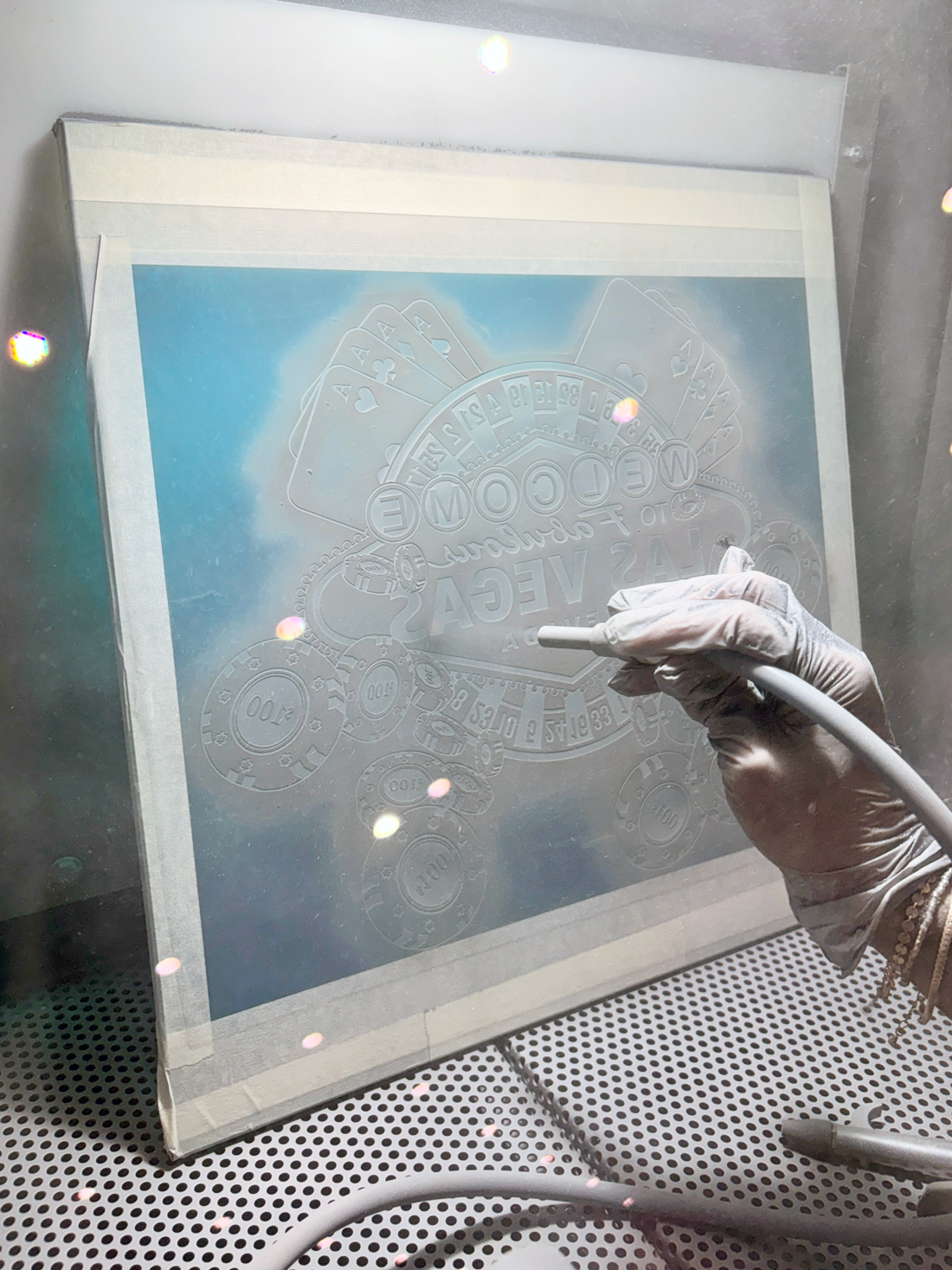
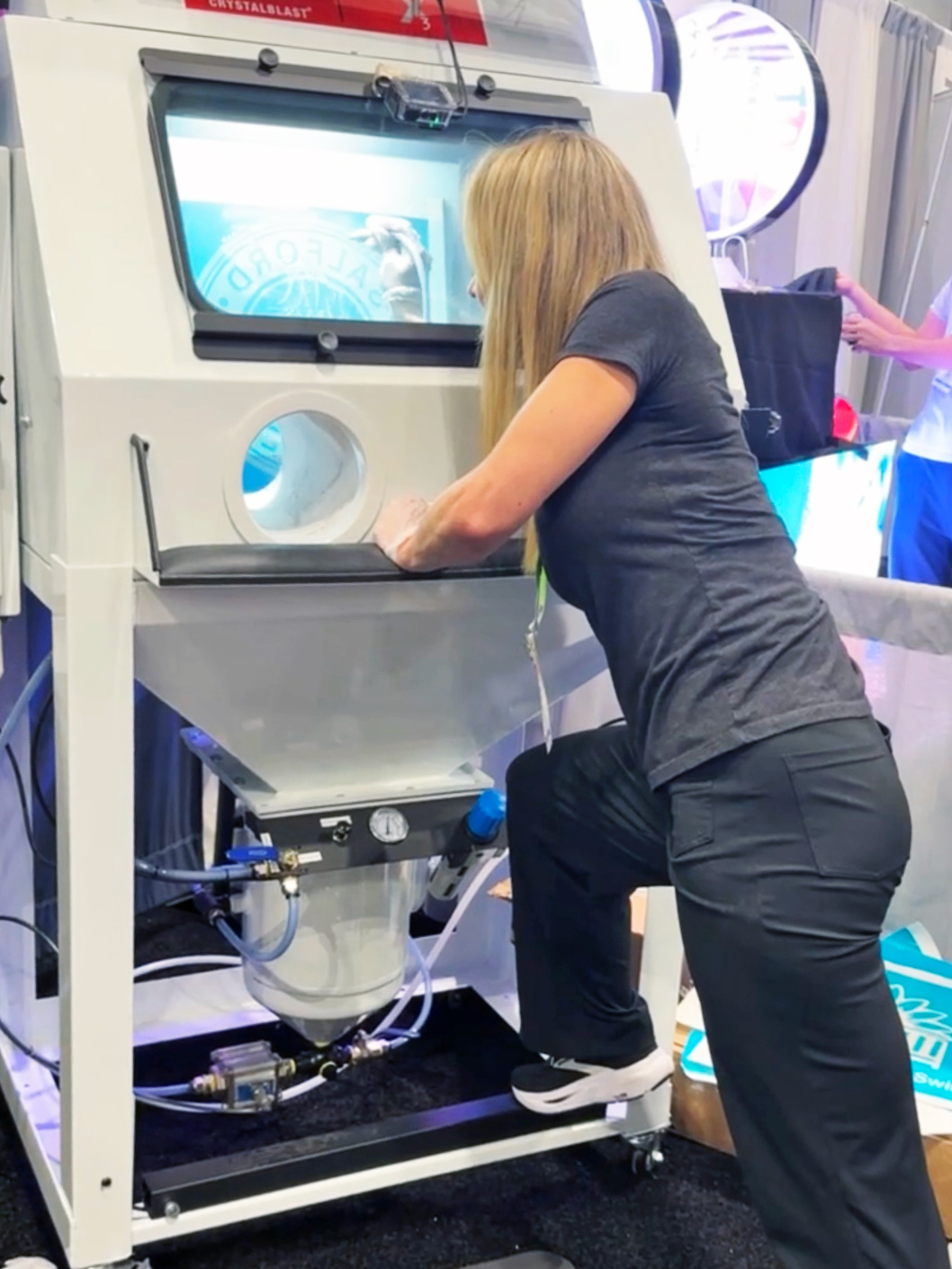
For smaller sign panels, plaques, branded displays, and custom etched pieces, the CrystalBlast Elite 3.0 is an excellent choice. Its ergonomic design, strong dust collection, and controlled blasting environment make it a great fit for detailed sign work. If your shop wants a premium manual cabinet for smaller signs and custom projects, the Elite 3.0 is a strong option.
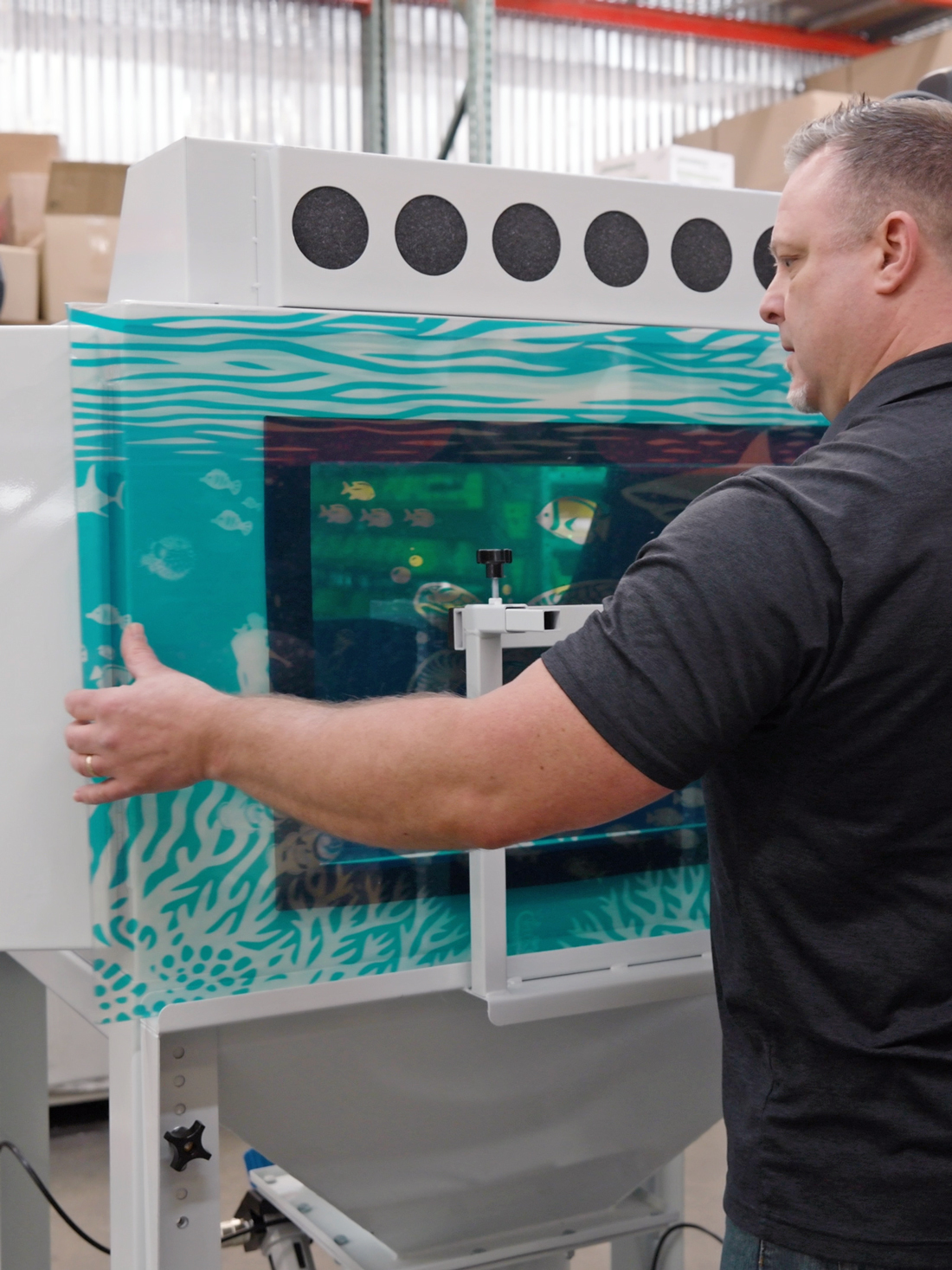
CrystalBlast Elite X3 Extended for large signs
If your shop needs to engrave oversized signs, large architectural glass, donor walls, or monument-style pieces, the CrystalBlast Elite X3 Extended is designed for that kind of work. Its removable back panel allows operators to sandcarve large substrates such as signs and monuments while still working within an enclosed cabinet.
This makes it an excellent solution for sign makers who want to handle larger panels without moving to a more open blasting setup. For more on this application, read Sandcarving Large Glass Panels and Monuments with the CrystalBlast Elite X3 Extended.
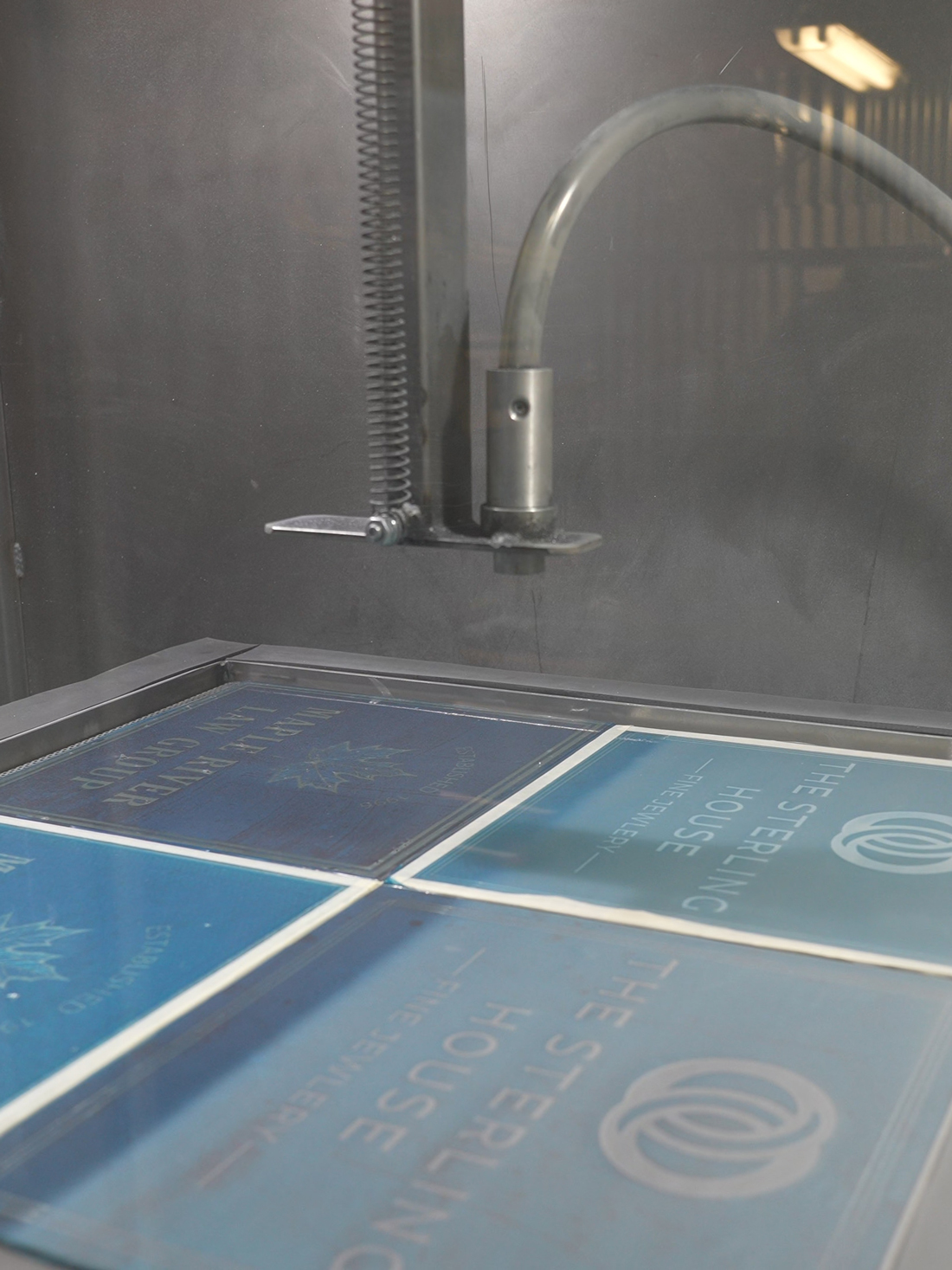
CrystalBlast Nexus for automation
For sign companies looking to increase throughput, automate repeat work, or improve consistency in production, the CrystalBlast Nexus is the automation solution to consider. The Nexus is built for programmable, repeatable sandcarving and sandetching, making it a smart fit for sign manufacturers who want to streamline production.
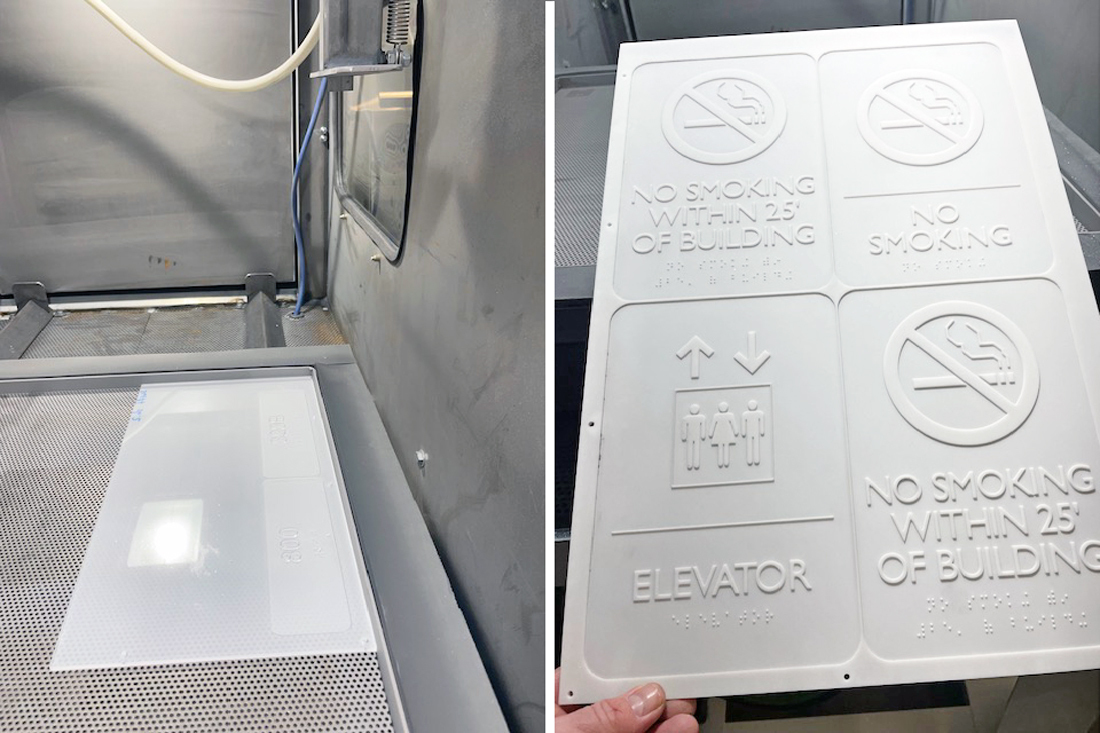
The CrystalBlast Nexus can also be an excellent solution for producing ADA signage (shown above). For shops making tactile and engraved signs where consistency matters, the Nexus offers two major advantages: a smooth engraving appearance with no visible engraving lines and automation that helps ensure uniform, repeatable results from sign to sign. That combination can be especially valuable for ADA work, where clean presentation and dependable consistency across multiple pieces are important.
If your business is moving toward higher volume or wants to reduce manual variation in repeat jobs, the Nexus can help. To learn more, read Automated Sandcarving with the CrystalBlast Nexus.
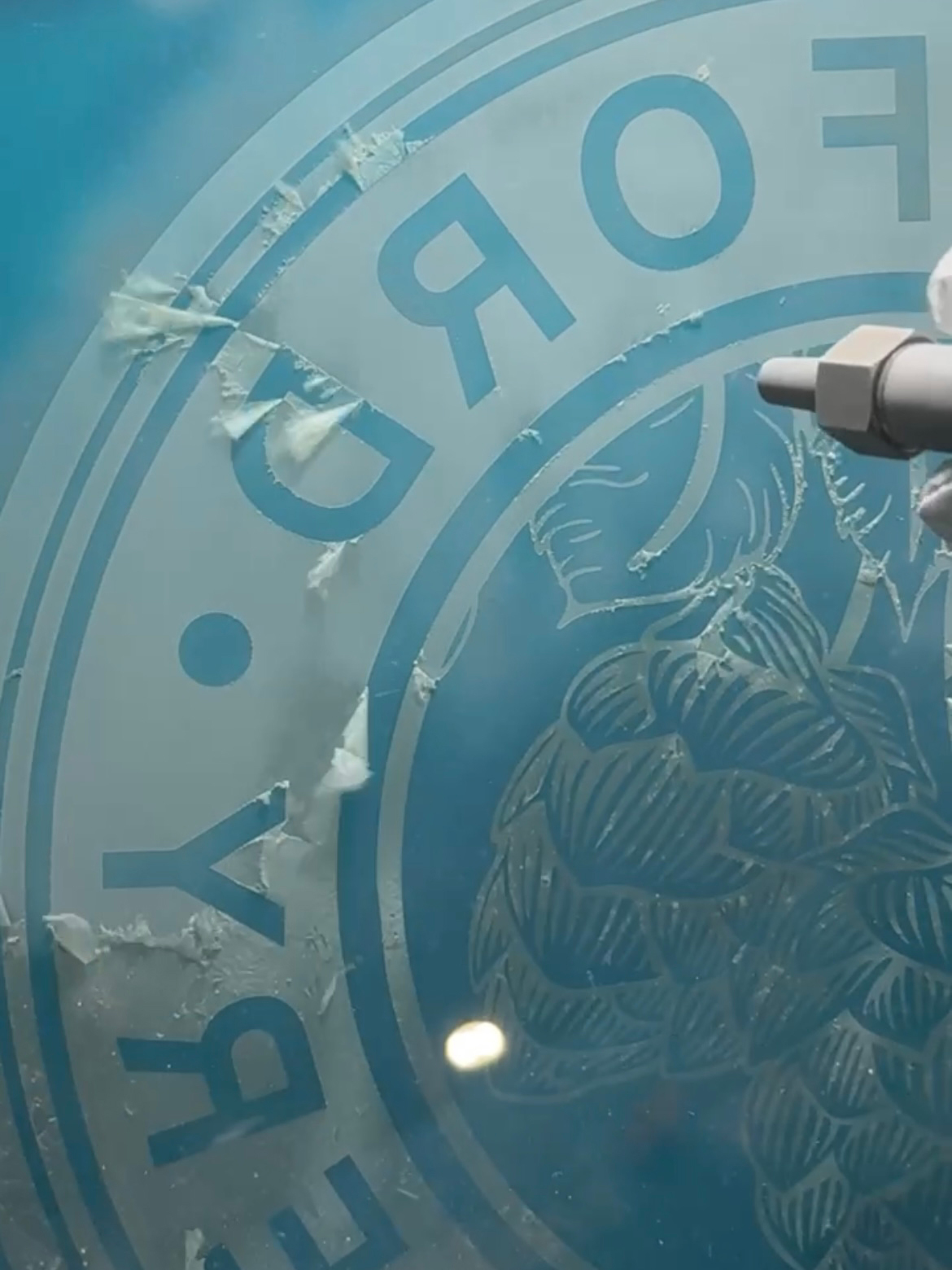
Recommended Films for Engraving Signs
Choosing the right mask material is just as important as choosing the right sandcarver. For sign work, the best film depends on your substrate, the depth you want to blast, the level of detail in the artwork, and whether you are combining laser engraving with sandcarving.
Laser mask films for laser engraving, then sandcarving
If your workflow starts with a laser, IKONICS Imaging laser mask films are the right place to begin. These films allow you to combine the convenience and precision of your laser engraver with the depth and finish of sandcarving. This approach can be especially valuable for premium signage, glass signs, painted signs, stone signs, and branded architectural panels.
A few film options to consider include:
- LaserTape for many glass and crystal applications
- Blazer Orange for fine detail, clean peel, and color fill applications
- Laser THICK for deeper etching and more demanding surfaces such as stone, brick, powder-coated metal, and other textured substrates
If your sign shop is using a CO₂ laser and wants to add sandcarving for more depth and a smoother etched finish, these films can help bridge the two processes. For a deeper breakdown, read Which Laser Mask Film Should I Use for Laser Engraving?.
Washout photoresist films for sandcarving only
If you are not using a laser to create the stencil, one of IKONICS Imaging’s washout photoresist films may be the better choice. The ideal film depends on three main factors: your substrate, your desired blast depth, and the level of detail in your artwork.
That matters in the sign industry because different jobs require different film characteristics. A thicker film is often better for longer blasting on tile, stone, or other durable materials. A thinner film may be enough for surface etching. For fine detail, thinner films generally hold narrower lines more effectively. For deeper carving or stage carving, a thicker film is often the better fit.
There is no one-size-fits-all film for every sign application. The best choice depends on what material you are blasting, how deep you need to go, and how detailed the design is. For more guidance, read Choosing the Right Photoresist Thickness.
Additional Opportunities for the Sign Industry
Sandcarving can help sign shops move into adjacent categories and higher-end applications. It is a strong fit for donor walls, memorial signs, architectural glass, branded stone pieces, dimensional panels, and decorative wayfinding. It can also complement existing laser workflows, giving sign makers another way to create premium results without replacing the equipment they already use.
For shops that want to stand apart from competitors offering only flat or surface-level decoration, sandcarving provides another level of visual and tactile impact. It can help turn standard signage into something more memorable.
-> WATCH VIDEO: Sandcarving Large Sign at ISA with The Country Porch Swing
Final Thoughts
Sandcarving gives sign shops a way to create signage with more depth, more texture, and a more premium appearance. It is a valuable solution for everything from small etched signs and branded panels to large architectural glass, monument signage, and automated production work.
For smaller sign projects, the CrystalBlast Elite 3.0 is a great place to start. For oversized signs and large panels, consider the CrystalBlast Elite X3 Extended. For automated production, explore the CrystalBlast Nexus. And when it comes to mask selection, be sure to review both Choosing the Right Photoresist Thickness and Which Laser Mask Film Should I Use for Laser Engraving?.
If you have questions about which sandcarver or film is right for your sign application, contact the IKONICS Imaging team. We are happy to help you choose the right solution based on your substrate, artwork, depth requirements, and production goals.