
9th Jun 2026
Blazer Black vs. Blazer Orange: Diode Laser Time Study on Glass
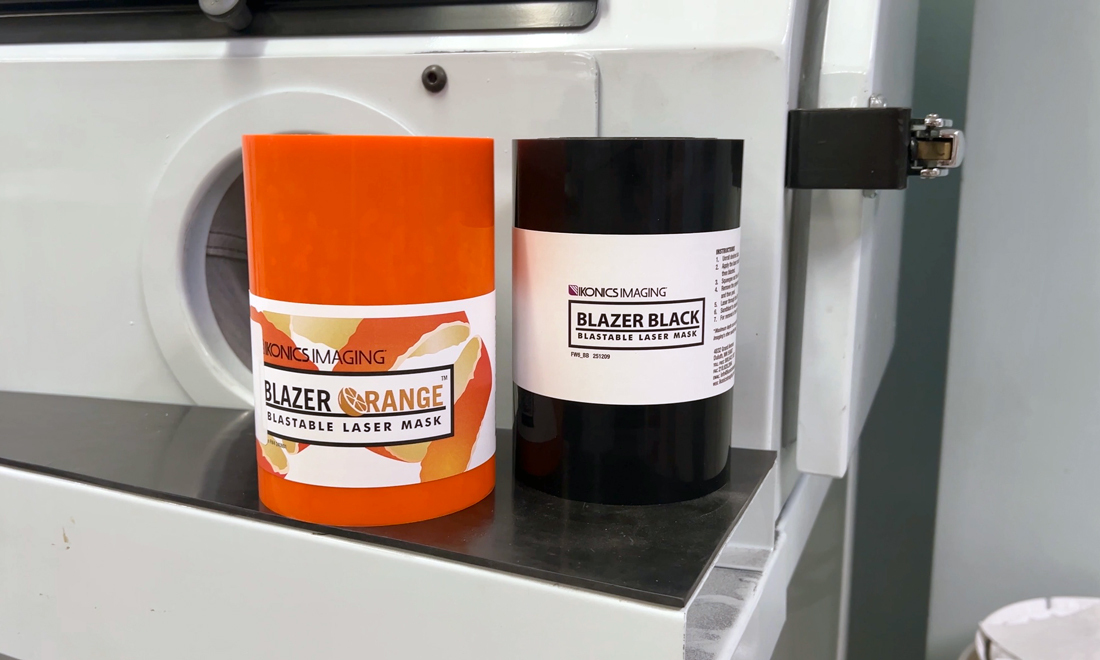
Laser mask films make it possible to combine the convenience of laser processing with the depth, texture, and premium finish of sandcarving. But not every laser mask film responds the same way to every type of laser.
In our latest YouTube video, Time Study: Blazer Black vs. Blazer Orange with Diode Laser on Glass, we compared two IKONICS Imaging laser mask films on glass using a diode laser: Blazer Orange and Blazer Black. The goal was simple: see how long it takes each film to process with a diode laser before sandcarving.
WATCH VIDEO: Time Study: Blazer Black vs. Blazer Orange with Diode Laser on Glass
What Is Laser Mask Film Used for in Sandcarving?
In this type of workflow, the laser is not engraving the glass. Instead, the laser is removing the mask film from the areas that will later be sandcarved.
Once the mask has been opened, the glass is placed inside a sandcarving cabinet, where abrasive media creates the actual engraved effect. This is what gives sandcarved glass its depth, texture, and professional etched finish.
The laser creates the stencil. The sandcarver creates the engraving.
Testing Blazer Orange Laser Mask Film with a Diode Laser
Blazer Orange has been a trusted laser mask film for years. It is especially popular with CO2 laser users because it creates a durable, sandblastable mask that performs well on glass, crystal, stone, ceramic, and other substrates.
Blazer Orange also offers excellent contrast on many surfaces, which makes it easier to see the mask during setup and processing. For many CO2 laser users, that orange color is one of the reasons they continue to prefer it.
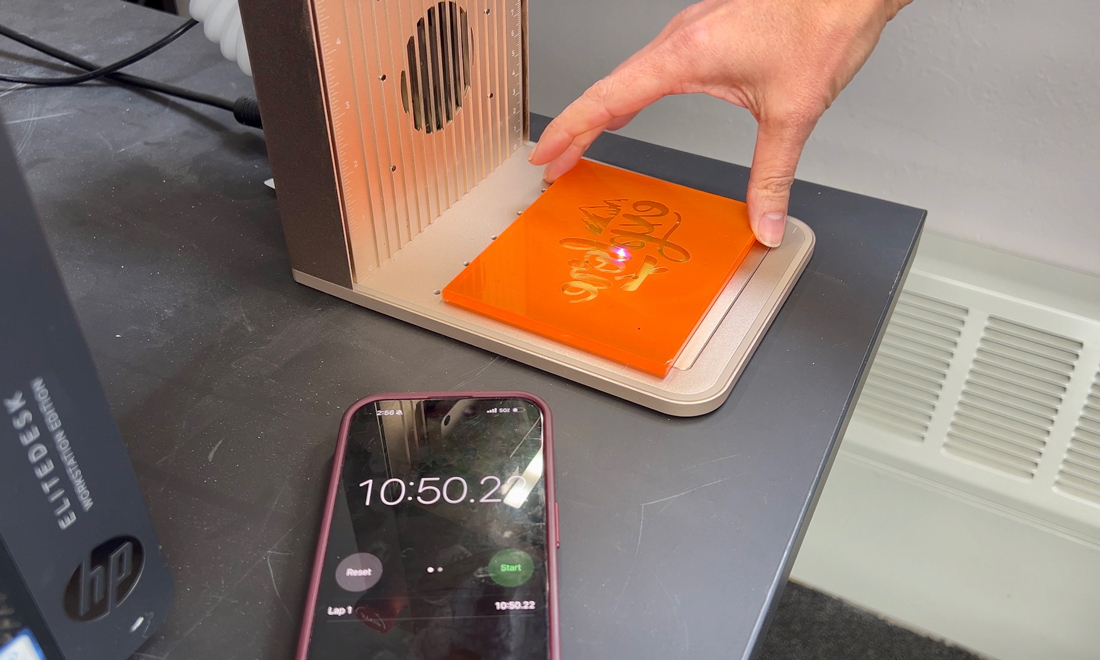
With a diode laser, however, the process takes longer. Diode lasers interact differently with the orange film, so the laser needs more time to remove the mask from the areas being opened for blasting.
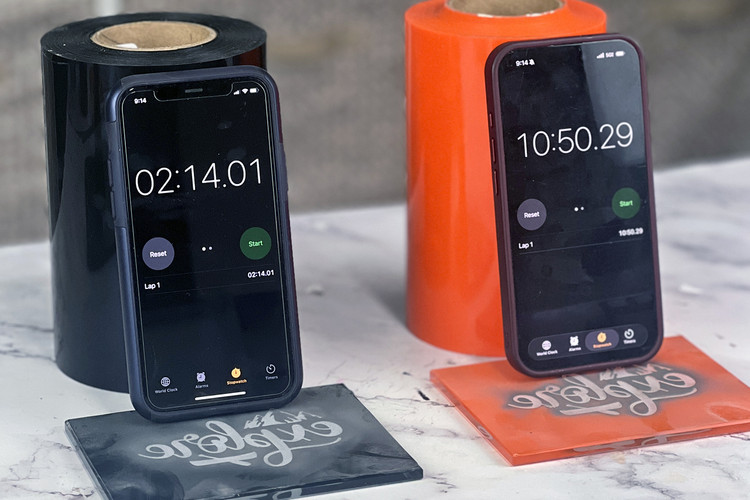
In our time study, the Blazer Orange sample took almost 11 minutes of laser time.
For an occasional one-off piece, that may not be a major concern. But for decorators, personalization shops, award makers, and businesses producing repeat orders, that extra time can add up quickly.
Testing Blazer Black Laser Mask Film with a Diode Laser
Next, we tested Blazer Black using the same laser-to-sandcarving process.
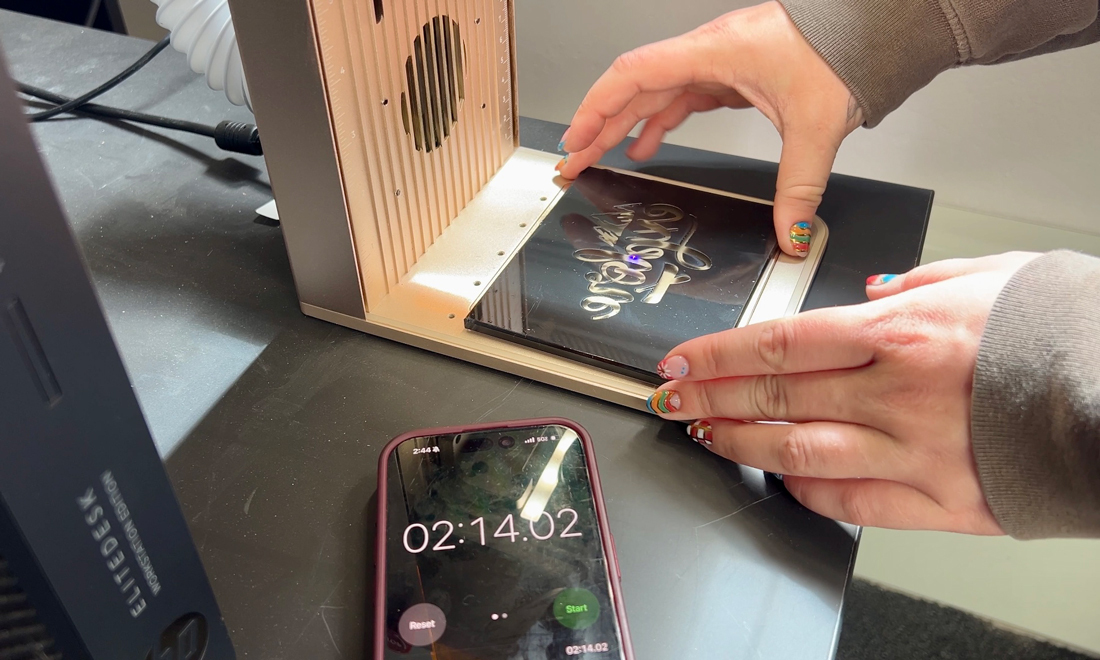
Blazer Black was developed specifically for customers using diode lasers. The black surface absorbs diode laser energy more efficiently, allowing the laser to open the mask much faster than Blazer Orange.
The process is still the same: the laser removes the mask, and the sandcarver creates the engraving. But with Blazer Black, the mask opens much faster under the diode laser.
In this test, the Blazer Black sample took only a little over 2 minutes of laser time.
That is a major improvement for diode laser users, especially for shops producing multiple pieces or trying to improve workflow efficiency.
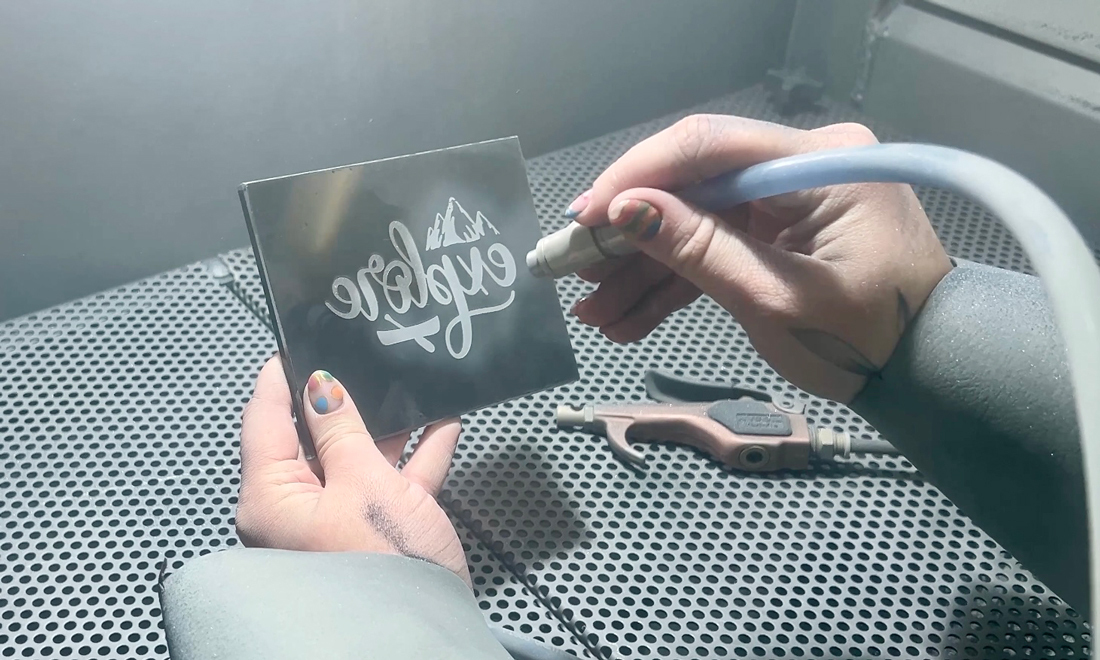
Sandcarving Glass After Laser Mask Processing
After laser processing, both samples were sandcarved.
The Blazer Orange sample did have some slight adhesive residue left behind after laser processing. It took a little longer to blast through, but the sandcarving process did break through the residue and engrave the glass.
The Blazer Black sample also had some light residue, but it blasted through more easily. Because the mask opened faster and more cleanly under the diode laser, the remaining residue was easier to work through during the blasting step.
In both cases, the laser mask films allowed the glass to be sandcarved. The major difference was the amount of time required to get to that point.
Blazer Black vs. Blazer Orange Time Study Results
The final result was clear: both films can be used for a laser-to-sandcarving workflow with a diode laser, but Blazer Black is much faster.
- Blazer Orange: almost 11 minutes of laser time
- Blazer Black: just over 2 minutes of laser time
That reduction in laser time can make a big difference in a production environment. Less time at the laser means you can move to the sandcarving step faster, complete more pieces, and improve overall throughput.
Best Laser Mask Film for Diode Lasers
The right laser mask film depends on the type of laser you are using.
If you are using a CO2 laser, Blazer Orange remains a strong option. It creates a durable mask, offers excellent contrast, and continues to perform well in sandcarving applications.
If you are using a diode laser, Blazer Black is the faster and more efficient choice. It was created for diode laser users and helps reduce the time needed to open the mask before blasting.
You can also view all available laser mask films for sandcarving to compare options for your equipment and application, or head to our blog post, Which Laser Mask Film Should I Use For Laser Engraving.
Final Takeaway: Faster Diode Laser Masking with Blazer Black
Both Blazer Orange and Blazer Black can be used to combine laser processing with sandcarving. But if you are using a diode laser, Blazer Black helps you get to the sandcarving step much faster.
For shops producing custom glass, awards, drinkware, promotional products, or repeat orders, that time savings can be a valuable workflow improvement.